
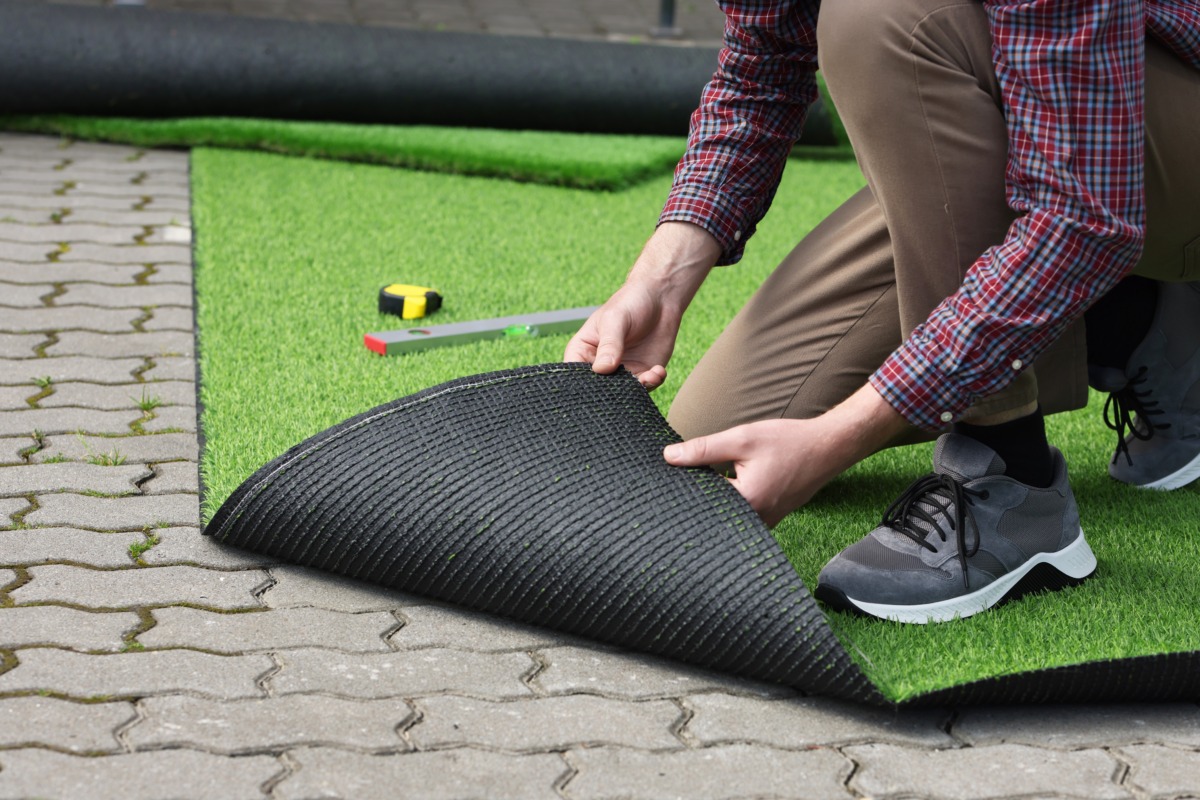
How to Choose an Artificial Turf Installer in Dallas: 7 Questions to Ask Before You Sign
Artificial turf is a long-term investment, and who installs it matters as much as the product itself. A poorly installed turf system on an under-engineered base will develop drainage problems, surface irregularities, and visible seam issues within a few years, regardless of how good the turf product is. With a growing number of companies offering synthetic grass installation throughout the Dallas-Fort Worth area, knowing what to ask before you hire protects you from costly mistakes. These are the seven questions that separate quality installers from shortcuts.
Question 1: Do You Use Subcontractors?
This is the most important question you can ask, and many homeowners never think to ask it. Some turf companies sell the installation and then hand the job off to a third-party crew they do not directly employ or train. That means the people who show up at your house may have no relationship with the company whose name is on the truck.
When a company uses its own in-house, trained installation crew on every project, you get consistent quality, direct accountability, and a company that stands behind the work because the same people who did it will answer the phone if something goes wrong.
Ask specifically: Is the crew that installs my project your own employees, or do you hire subcontractors? Get the answer in writing if possible.
Question 2: What Drainage Rate Does Your Base System Achieve, and How Is It Engineered for DFW Clay?
Drainage is the most commonly overlooked part of an artificial turf installation in North Texas, and it is the part that causes the most problems when done wrong. DFW sits on Blackland Prairie clay soil, which is some of the most drainage-resistant soil in the United States. Clay expands when wet and contracts when dry, which means a turf base that is not properly engineered for clay subgrade will shift, settle unevenly, and develop low spots where water pools.
A professionally engineered base system for DFW clay should drain at 30 or more inches per hour. Any installer who cannot give you a specific drainage rate for their base system, or who does not mention clay soil conditions at all, is not engineering your base appropriately for this market.
Ask: What is your base drainage rate? What aggregate do you use for base compaction? How do you account for DFW clay subgrade in your base preparation?
Question 3: What Are the Warranty Terms, and What Do They Cover?
Artificial turf warranties come in two forms that are completely separate from each other: the product warranty from the manufacturer, and the installation labor warranty from the installer. Both matter, and you need to understand what each covers.
Product warranties from reputable synthetic turf manufacturers typically run 10 to 15 years and cover things like fiber degradation, UV fade, and backing failure under normal use conditions. Read the warranty carefully for exclusions, particularly around pet use, infill requirements, and installation method requirements.
The labor warranty covers the installation itself, including seam integrity, base performance, and edge security. Some installers offer no labor warranty at all. Others offer a short one-year warranty. A company that stands behind its work should offer a meaningful installation warranty and be willing to put the specific terms in your contract.
Ask: What product warranty does this turf carry, and can I see the warranty documentation? What labor warranty do you provide on the installation itself, and what does it cover?
Question 4: What Infill Do You Use and Why?
Infill is the granular material applied between turf blades to stabilize fiber orientation, add cushioning, and support drainage performance. The choice of infill affects how the turf looks, how it drains, how it handles pet use, and how it performs in Texas heat.
Common infill options include crumb rubber (recycled tire material), silica sand, zeolite (particularly useful in pet turf applications for odor control), and organic infill products made from materials like cork or coconut fiber. There is no single right answer for every project, and a knowledgeable installer will recommend different infill options based on the specific use case.
A vague answer like “we use sand infill” without any explanation of why, or an installer who uses only one type of infill for every application, suggests they are not matching the infill specification to the project.
Ask: What infill will you use for my specific project, and why is that the right choice for this application?
Question 5: Can You Provide References From Installations in This Area?
Local references are more valuable than national reputation for an installation business. Soil conditions, heat exposure, and drainage challenges vary by region, and what works in California or Florida does not always translate directly to DFW clay soil and 100-plus degree summers.
Ask for references from installations completed in your general area, and specifically ask about installations that are at least two to three years old. A turf system that was just installed looks good. How it looks and performs after two or three North Texas summers is the real test.
Online reviews on Google, Birdeye, and Trustindex are useful but are typically recent. Older references from real customers give you a more complete picture of how the installation holds up over time.
Question 6: What Does Your Written Proposal Cover?
A professional turf installation proposal should be specific and detailed. If you receive a quote that is just a single price with no breakdown, that is a warning sign.
A complete written proposal should include the specific turf product name, pile height, face weight, and manufacturer. It should specify the type and depth of base aggregate, the drainage rate the base system will achieve, the type of weed barrier, the infill product and application rate, the labor scope including excavation, grading, installation, and cleanup, and the project timeline. It should also clearly state the warranty terms for both product and labor.
Hidden fees on turf installations often appear as add-ons for soil disposal, additional excavation depth, or base material upgrades that were not disclosed upfront. A transparent proposal eliminates these surprises.
Ask: Can I see an itemized written proposal before I commit to anything?
Question 7: How Long Have You Been Installing Turf, and Is It Your Primary Business?
General landscaping companies that offer turf as an add-on service are not the same as companies that specialize exclusively in synthetic turf installation. A company that installs sprinkler systems, plants trees, mows lawns, and occasionally installs turf when asked is approaching each turf job as a new project. A company whose entire business is artificial turf installation has done it hundreds or thousands of times and has refined their base engineering, seaming technique, and installation standards over many years.
Ask: Is artificial turf installation your primary specialty, or one of many services you offer? How many turf installations have you completed in the Dallas-Fort Worth area specifically?
A Quick Checklist Before You Sign
- In-house installation crew confirmed (no subcontractors)
- Drainage rate specified for DFW clay conditions (30+ inches per hour)
- Product warranty terms reviewed and in writing
- Labor/installation warranty terms in writing
- Infill type and rationale explained for your specific use
- Local references available from installations 2+ years old
- Itemized written proposal with no vague line items
- Company specializes in turf, not a general landscaping service
Ready to Ask These Questions?
North Texas Luxury Lawns & Greens has specialized exclusively in artificial turf installation throughout the Dallas-Fort Worth Metroplex since 2015. We are BBB A+ accredited with a 5-star Google rating, and every installation is performed by our own trained, in-house crew with no subcontractors. We engineer every base to drain at 30 or more inches per hour for DFW clay conditions, use premium turf products with manufacturer warranties up to 15 years, and provide detailed written proposals with no hidden fees.
Call (972) 412-6569 or request a free on-site quote at northtexasluxurylawns.com/request-quote/. We are happy to answer every question on this list before you make any commitment.