
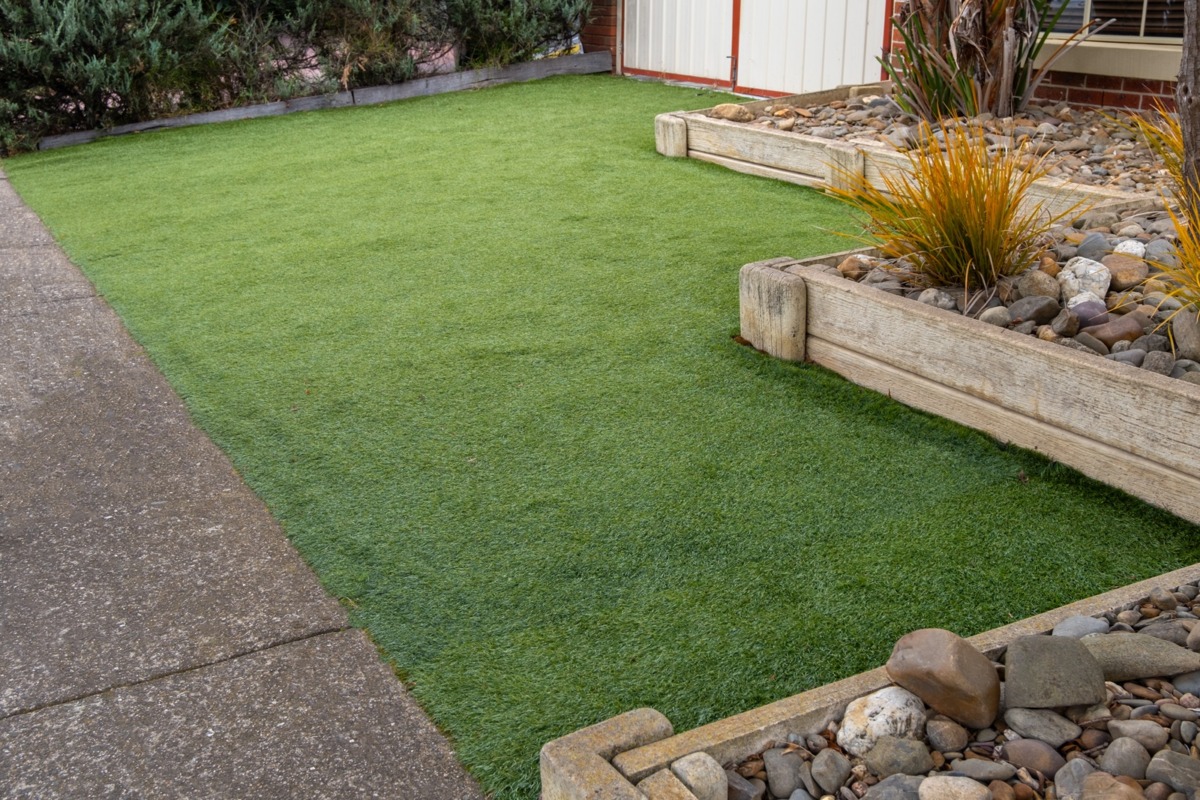
Artificial Turf for DFW School Districts: Specs, Safety Standards, and What Facilities Teams Should Know
School district facilities managers evaluating artificial turf for campus playgrounds, outdoor activity areas, and courtyard spaces are navigating a decision that involves safety specifications, procurement processes, budget comparison across a multi-campus portfolio, and maintenance implications for facilities staff. This guide covers the technical and operational questions that come up most frequently in these evaluations, and it is written specifically for the DFW context, where the combination of Blackland Prairie clay soil, intense summer heat, and rapidly growing district enrollment creates a specific set of performance requirements.
Why DFW School Districts Are Evaluating Artificial Turf
The case for artificial turf on school campuses in the Dallas-Fort Worth area is driven by a combination of operational and student experience factors that natural grass handles poorly in this climate.
Maintenance on a School Campus Is Different From Maintenance on a Business Property
A school campus is occupied during the day, five days a week, for the majority of the year. Mowing and landscaping equipment operating around students creates scheduling constraints that most facilities teams manage by mowing early morning or after hours. Irrigation systems run on timed schedules that have to be coordinated around recess and outdoor programming. Chemical treatments for fertilization, weed control, and pest management have to be applied on days and at times when students are not in contact with treated surfaces.
Artificial turf removes the mowing, irrigation, and chemical treatment requirements entirely for the areas where it is installed. Facilities staff retain responsibility for rinsing and periodic brushing, which can be handled as part of routine outdoor maintenance without specialized scheduling.
Natural Grass Fails in DFW School Recess Conditions
Elementary school playgrounds in DFW take some of the most concentrated daily foot traffic of any commercial application. Natural grass on DFW clay soil develops muddy zones after rain that take days to dry out, bare dirt patches in high-traffic areas under swings and at slide exits, and compacted clay surfaces that become hard and uneven over time. These conditions force cancellation of outdoor recess after rain events and create surface inconsistency that affects both usability and appearance.
Safety Standards: What to Know About ASTM F1292
For school district facilities managers, the most important technical specification for playground turf is the ASTM F1292 standard, which governs impact attenuation. This standard addresses the surface’s ability to reduce the force of a fall to below the threshold associated with life-threatening head injury.
The standard is expressed in terms of Gmax (peak deceleration) and HIC (Head Injury Criterion). Compliant surfaces must achieve Gmax below 200 and HIC below 1000 when tested at the critical fall height of the equipment on the playground. The critical fall height is the distance from which a child could fall from the highest accessible part of the equipment.
To meet ASTM F1292 at playground equipment fall heights, artificial turf installations require a foam shock pad installed between the aggregate base and the turf surface. The required pad specification depends on the critical fall height specific to each campus’s equipment. A compliant system cannot be specified without knowing the equipment’s critical fall height, which is why a site evaluation is a required first step in any school district playground turf project.
North Texas Luxury Lawns evaluates each campus individually, reviews the equipment in the installation zone, and recommends the appropriate underlayment specification for that specific site. Learn more at northtexasluxurylawns.com/playground-turf/ and northtexasluxurylawns.com/commercial/school-districts/.
No Chemical Treatments Around Students
Artificial turf requires no pesticide, herbicide, or fertilizer applications. This is a meaningful operational and health consideration for school environments. Natural grass maintenance in DFW typically involves multiple annual applications of pre-emergent weed control, insecticide, and fertilizer. On campuses where students use outdoor areas throughout the school day, eliminating chemical treatments from those surfaces removes a category of exposure risk entirely.
Year-Round Usability for Campus Programming
Outdoor recess and physical education programming in DFW school districts is affected by natural grass surface conditions throughout the school year. Wet clay surfaces after rain force outdoor programming inside or to asphalt areas that do not provide the play experience that grass areas do. Artificial turf drains at 30 or more inches per hour, which means campus outdoor surfaces are usable within hours of a rain event rather than the days that DFW clay soil requires to dry out.
Budget Evaluation for ISD Facilities Managers
School district facilities evaluations typically compare the installed cost of artificial turf against the ongoing cost of maintaining natural grass on the same surfaces across a projected 10 to 15-year horizon. The relevant cost categories for natural grass are mowing and landscaping contracts, irrigation utility costs, chemical treatment programs, and periodic re-sodding or surface remediation.
Artificial turf eliminates these ongoing costs for the installed areas and replaces them with a one-time capital expense. Product warranties run up to 15 years. The per-year cost of maintaining artificial turf after installation is dramatically lower than the per-year cost of maintaining natural grass to the same standard in DFW climate conditions. For district budget planning purposes, this analysis is most straightforward when conducted at the individual campus level, starting with the highest-maintenance and highest-use outdoor areas.
North Texas Luxury Lawns provides detailed written proposals for school district projects that include product specifications, installation scope, and warranty terms, which supports the documentation requirements typical of ISD procurement processes. We are happy to work with district procurement teams on the information required for a capital budget evaluation.
Serving DFW School Districts
North Texas Luxury Lawns & Greens is BBB A+ accredited with a 5-star Google rating, and every installation is completed by our own in-house crew with no subcontractors. We work with district facilities directors and campus principals across the DFW area, including communities served by FISD, PISD, MISD, AISD, RISD, CISD, LISD, and surrounding districts.
Call (972) 412-6569 or visit northtexasluxurylawns.com/request-quote/ for a free consultation. Our school district commercial page is at northtexasluxurylawns.com/commercial/school-districts/.