
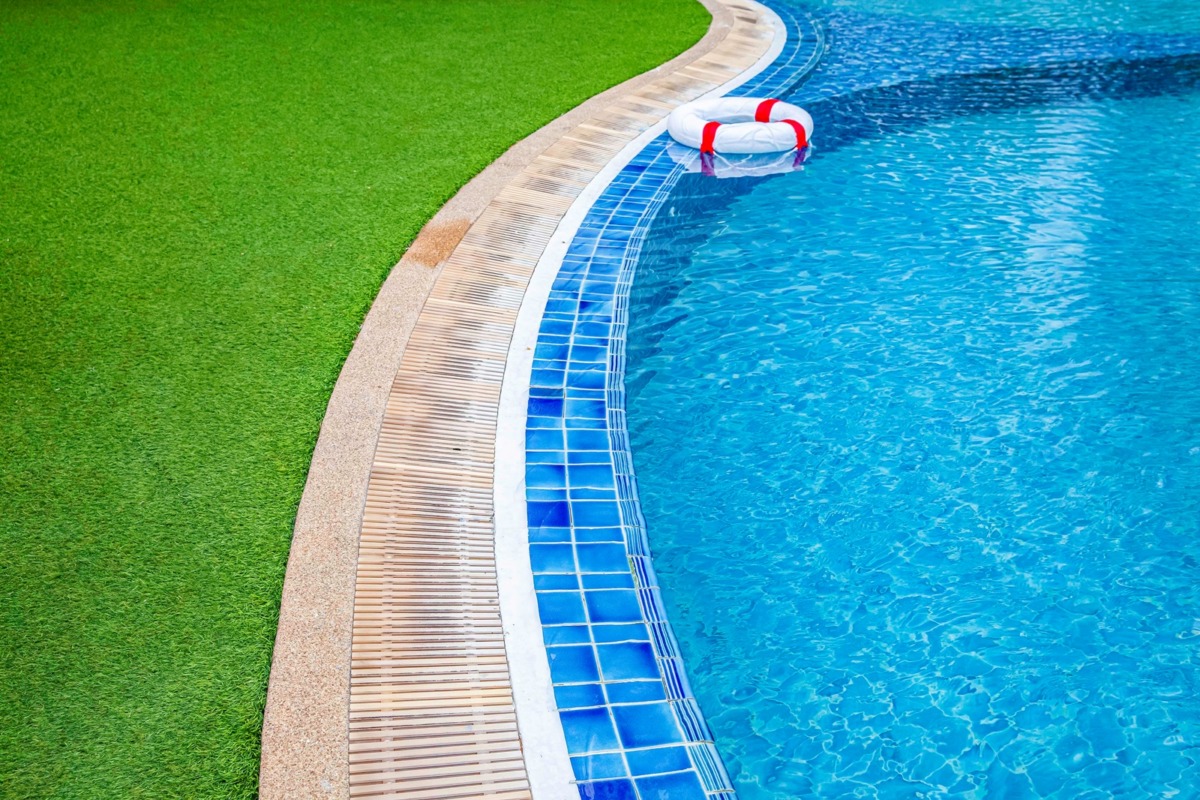
Artificial Turf Around Your Pool in North Texas: Heat, Drainage, and What to Know Before You Install
Artificial turf around a backyard pool is one of the most satisfying upgrades a North Texas homeowner can make to an outdoor living space. No more muddy grass tracked into the pool. No more grass clippings in the water. No more bare, compacted dirt patches where foot traffic has killed everything at the pool edge. But pool surrounds are also one of the more specific applications in artificial turf, and there are a handful of factors that are more important here than in a standard backyard installation. This guide covers all of them honestly.
Why Natural Grass Fails Around DFW Pools
Natural grass around a backyard pool in the Dallas-Fort Worth area faces a specific set of combined stresses that almost no turfgrass species handles well over time:
- Constant moisture from pool splash-out and wet foot traffic keeps the area perpetually saturated, which is particularly damaging on DFW clay soil.
- Heavy foot traffic concentrated at pool entry and exit points compacts the soil rapidly and wears the grass to bare dirt.
- Pool chemical exposure, particularly chlorinated water and splash-out from shock treatments, kills natural grass and creates persistent bare zones along the pool edge.
- Grass clippings, seed heads, and organic debris blown or tracked into the pool require constant skimming and filtration work.
Most DFW homeowners with natural grass around their pools eventually find themselves with a combination of bare dirt, compacted clay, and struggling grass that looks poor for most of the season. Artificial turf eliminates all of these problems simultaneously.
Does Pool Chlorine Damage Artificial Turf?
This is the most common question we hear from homeowners considering pool surround turf, and the honest answer is: no, normal pool water does not damage quality polyethylene artificial turf fibers.
Standard residential pool chlorine concentration runs between 1 and 3 parts per million. Polyethylene fibers, which are the material used in quality residential turf products, are chemically resistant to chlorine at concentrations far higher than any residential pool maintains. Chlorinated splash-out water passes through the permeable turf backing and drainage system without degrading the fiber structure.
There is one important caveat worth knowing: undiluted pool chemicals, specifically concentrated chlorine or muriatic acid spilled directly onto the turf during pool maintenance, can cause localized fiber damage. The simple prevention is to store pool chemicals away from the turf area and to rinse any accidental spills immediately with water. Saltwater pools present no additional concern, as saltwater concentration in residential pools is well within what polyethylene fibers handle without issue.
The Heat Question for Pool Surrounds
Artificial turf surface temperatures in direct sun are a real and legitimate consideration for pool surrounds, particularly in North Texas where summer temperatures regularly exceed 100 degrees. This was covered in detail in our blog post on turf heat in Texas at northtexasluxurylawns.com/does-artificial-turf-get-too-hot-in-a-texas-summer-an-honest-answer/.
For pool surround applications specifically, there are several factors that modify the heat picture in important ways:
- Pool water naturally cools the immediate turf area through evaporation and splash cooling. The turf directly adjacent to the pool edge stays meaningfully cooler than turf on the far side of the yard.
- Wet feet on turf provide a natural cooling layer between bare skin and the turf surface. Most pool surround use involves wet feet, which significantly reduces the direct surface contact temperature experienced by users.
- Rinsing the turf with a hose before heavy barefoot use drops the surface temperature quickly. For pool environments, this requires only the water that is already present.
- North Texas Luxury Lawns offers heat-reflective turf products designed for high-sun applications, including pool surrounds, that reduce peak surface temperatures compared to standard polyethylene products. Ask about this option during your consultation.
One less obvious heat consideration for pool surrounds: reflected light from glass surfaces, light-colored walls, or certain fencing materials near the pool can intensify solar heat on turf in specific zones. During a site visit, our team identifies any reflection sources that might affect surface temperatures in your specific installation layout.
Drainage Design for Pool Surrounds in DFW
Drainage is the most technically important aspect of a pool surround turf installation. A pool deck environment handles three simultaneous water sources: splash-out from pool activity, rainfall, and drainage from the pool itself during heavy storms. All of this water needs to move efficiently through and away from the turf surface.
Our pool surround installations use fully permeable turf backing with a compacted aggregate base that drains at 30 or more inches per hour, which is the same specification used in all of our standard installations but critically important here where water volume is higher. In pool surround layouts, we also evaluate the grade away from the pool to ensure water moves toward perimeter drain points or lawn areas rather than pooling at the pool edge or running back toward the house.
DFW clay soil creates the same drainage challenges under a pool surround as anywhere else on the property. The engineered aggregate base addresses this independently of the native soil conditions below it. See our pool and patio installation page at northtexasluxurylawns.com/pool-patio-artificial-grass-installation-north-tx/ for more information.
Turf Product Selection for Pool Surrounds
The right turf product for a pool surround differs in a few specific ways from a standard residential lawn product:
- Shorter pile height (typically 1 to 1.5 inches) performs better in wet, high-traffic environments than taller landscape turf, drains faster, and provides better foot traction when wet.
- Polyethylene monofilament fibers offer the best combination of softness underfoot, UV resistance, and chemical resistance for pool environments.
- Fully permeable backing, sometimes called drainage backing, ensures water does not pool on the surface.
- UV stabilization is critical for the intense sun exposure that pool surround turf receives, particularly in North Texas where UV index is high for most of the year.
North Texas Luxury Lawns will recommend the appropriate product for your pool surround during the free on-site consultation, taking into account your pool type, surrounding hardscape, drainage layout, and typical use patterns.
What a Professional Pool Surround Installation Looks Like
A well-executed pool surround turf installation creates a seamless transition between the pool deck or coping and the surrounding lawn area. Our team handles precision cuts around curved pool edges, existing coping, drainage elements, outdoor furniture anchor points, and landscaping features. The seams in a pool surround installation are held to particularly tight tolerances because of the wet foot traffic and the close inspection range that a pool deck creates.
Most residential pool surround installations are complete in one to two days. We include the pool area in our final inspection and leave the space ready to use. View examples of our pool and outdoor space installations in our gallery at northtexasluxurylawns.com/gallery/residential-artificial-grass/.
Get a Free Quote for Your North Texas Pool Surround
North Texas Luxury Lawns & Greens has installed artificial turf around pools and outdoor living spaces throughout Dallas, Plano, Frisco, McKinney, Southlake, Colleyville, Keller, and the surrounding DFW area. We are BBB A+ accredited with a 5-star Google rating, and every installation is performed by our own in-house crew with no subcontractors.
Call (972) 412-6569 or visit northtexasluxurylawns.com/request-quote/ to schedule a free on-site consultation for your pool area. We will evaluate your drainage layout, sun exposure, existing coping, and product options before providing a detailed written proposal with no hidden fees.