
Dog Run Surface Options in North Texas: Artificial Turf vs Gravel vs Concrete vs Decomposed Granite vs Mulch
If you are planning a dog run for your North Texas yard, the surface you choose will have a bigger impact on your daily life than almost any other decision in the project. The wrong surface means muddy paws after every rain, odors that worsen every summer, surfaces that are too hot for dog pads in July, or ground cover that your dog actively digs out. This comparison looks at the five most common dog run surface options in the DFW area honestly, including what each one does well and where each one falls short in North Texas conditions specifically.
Why North Texas Conditions Make Surface Selection More Important
DFW’s combination of heavy clay soil, intense summer heat, and alternating wet and dry seasons creates specific performance requirements for any dog run surface. Clay soil drains poorly, which means surfaces that rely on the native soil to move water will leave standing water after rain. Summer temperatures that regularly exceed 100 degrees mean any surface that absorbs and retains heat becomes uncomfortable or dangerous for dog pads during peak afternoon hours. And the wet-dry cycles of North Texas cause materials like decomposed granite to harden and crack in ways not seen in more consistent climates.
Option 1: Artificial Turf
Performance in North Texas Conditions
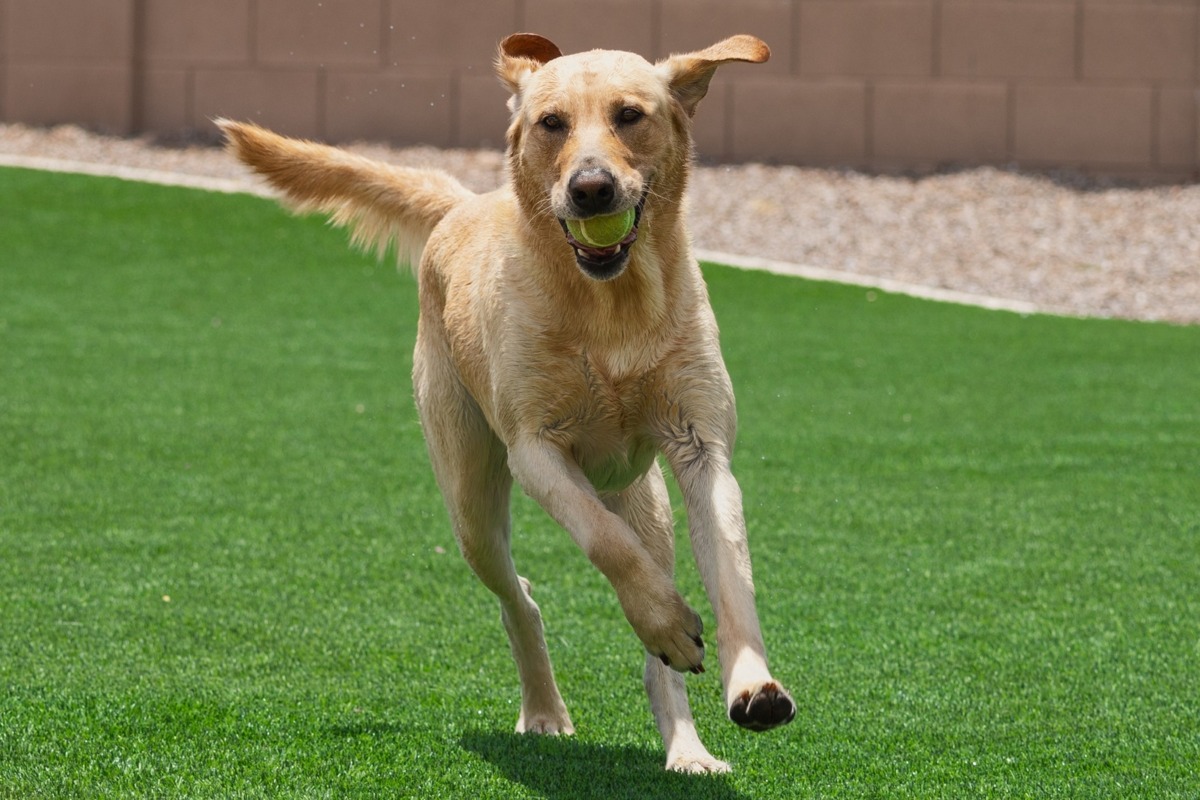
Artificial turf is the highest-performing dog run surface for DFW conditions across most evaluation criteria. A professionally installed system with antimicrobial pet turf and an engineered aggregate base drains at 30 or more inches per hour, which is dramatically faster than DFW clay soil and faster than any rain event North Texas realistically delivers. There is no mud. There are no bare patches under heavy use. The surface does not wash away, shift, or compact.
Antimicrobial pet turf fibers inhibit bacterial growth within the fiber structure itself. Combined with the fast-draining base that prevents moisture from sitting under the surface, odor management in a high-use dog run is significantly easier with artificial turf than with any organic surface material.
Heat Considerations
Artificial turf does get hotter than natural grass in direct afternoon sun, which is the single legitimate limitation of this surface in a North Texas dog run context. During peak summer hours with air temperatures above 100 degrees, turf surface temperatures in direct sun require management. The practical solutions are the same as for any other turf application: schedule outdoor dog time in morning and evening hours, rinse the surface with water before use during peak heat, and consider shade structures over high-use areas. More detail on this topic is available at northtexasluxurylawns.com/does-artificial-turf-get-too-hot-in-a-texas-summer-an-honest-answer/.
Maintenance and Longevity
Pet turf requires periodic rinsing, occasional enzyme treatment for odor control in high-use areas, and professional cleaning every one to two years depending on dog size and activity level. It does not wash away, require replenishment, or need regular leveling. Product warranties run up to 15 years. See our pet turf installation page at northtexasluxurylawns.com/artificial-grass/pet-turf/.
Option 2: Pea Gravel or River Rock
Performance in North Texas Conditions
Gravel is a commonly recommended dog run surface because it drains well and is relatively inexpensive. In North Texas conditions, its actual performance is more complicated. Gravel does drain, but only if it is installed over a properly graded base with adequate depth. On DFW clay, gravel installed directly over the native soil will drain water through the gravel layer and then have it sit on the clay below, eventually causing the gravel to sink into wet clay and create an uneven, difficult-to-navigate surface.
Gravel also retains heat significantly. In a North Texas summer, a gravel dog run in direct afternoon sun can reach surface temperatures comparable to or exceeding that of artificial turf, and gravel’s thermal mass means it stays hot longer after direct sun moves off it.
The Practical Problems
- Gravel displaces under digging activity, which is common in dogs. It requires regular raking and replenishment.
- Small gravel particles get caught in dog pads, particularly in dogs with thick paw fur.
- Waste management in gravel is more difficult than in turf. Solids sit on the surface but liquids move into the gravel where they are not easily rinsed out, creating odor accumulation in the gravel layer over time.
- Gravel tracked inside the house is a persistent issue.
Option 3: Concrete
Performance in North Texas Conditions
Concrete is durable, easy to clean, and does not displace. It is a practical surface for covered or shaded dog runs with good drainage design. In an exposed, full-sun North Texas dog run, it is among the worst surface choices for the dog’s comfort and safety.
Concrete surface temperatures in direct afternoon sun in DFW can exceed 160 degrees Fahrenheit, according to data from the Arizona State University Urban Climate Research Center on pavement surface temperatures in high-heat climates. Dog pads can sustain burns from surfaces above 125 degrees. A concrete dog run in direct afternoon sun from June through September in North Texas is not a safe surface for unsupervised dog use during peak heat hours.
Concrete also has no forgiveness underfoot for dogs with joint issues. Older dogs or breeds prone to hip and elbow problems do better on surfaces with some give.
Where Concrete Works
Covered or shaded concrete runs, or concrete used as a small section at the gate entry of a larger run rather than as the entire surface, are reasonable applications where the heat issue is managed by the structure.
Option 4: Decomposed Granite
Performance in North Texas Conditions
Decomposed granite is popular in Texas landscaping because of its visual appearance and initial affordability. As a dog run surface in DFW conditions, it has significant practical problems.
Decomposed granite hardens and crusts in the wet-dry cycles of North Texas. After the first major rain season, it compacts into a surface that does not drain appreciably better than bare clay and that creates a hard, abrasive surface underfoot. It also displaces and washes during heavy rain events, requiring replenishment.
Like gravel, it retains heat in direct sun. And like gravel, waste management in decomposed granite is difficult: liquids migrate into the compacted surface where they cannot be effectively rinsed out, creating persistent odor issues that worsen through DFW summers.
Option 5: Wood Mulch or Cedar Chips
Performance in North Texas Conditions
Wood mulch or cedar chips are soft underfoot, relatively cool, and initially easy to install. They are also the surface that degrades fastest in North Texas dog run conditions.
- Mulch absorbs liquid waste and becomes a high-odor surface rapidly in hot weather. In a DFW summer, a mulch dog run can develop odors within a few weeks of consistent use.
- Mulch provides an attractive habitat for fleas, ticks, and other insects, which is a significant concern for any pet area.
- Dogs frequently ingest wood mulch material, which can cause digestive problems.
- Mulch decomposes and requires replenishment annually or more often depending on use intensity and weather.
- After rain, mulch becomes wet, heavy, and tracked into the house in significant quantities.
The Comparison Summary for North Texas Dog Runs
No surface is perfect, but for the specific combination of DFW clay drainage, summer heat, pet odor management, and daily use intensity that North Texas dog runs experience, antimicrobial artificial turf with a properly engineered aggregate base outperforms all alternatives across the most important evaluation criteria: drainage speed, odor management, surface longevity, ease of maintenance, and year-round usability.
The one legitimate consideration is surface temperature management during peak afternoon hours in summer, which is a real factor but a manageable one with appropriate scheduling and rinsing practices. Every other surface has limitations in North Texas conditions that are either not manageable or require ongoing cost and effort that artificial turf eliminates.
Get a Free Dog Run Consultation for Your North Texas Property
North Texas Luxury Lawns & Greens designs and installs pet turf for dog runs, full-yard installations, and dedicated pet areas throughout the Dallas-Fort Worth Metroplex. Our pet turf products include antimicrobial fibers and are installed with base systems that drain at 30 or more inches per hour on DFW clay conditions. We are BBB A+ accredited with a 5-star Google rating, and every installation is completed by our own in-house crew with no subcontractors.
Call (972) 412-6569 or visit northtexasluxurylawns.com/request-quote/ to schedule a free on-site consultation. We serve Dallas, Plano, Garland, McKinney, Allen, Frisco, Murphy, Wylie, Sachse, and the surrounding DFW communities. Learn more about our pet turf options at northtexasluxurylawns.com/artificial-grass/pet-turf/.